
Myecostudio
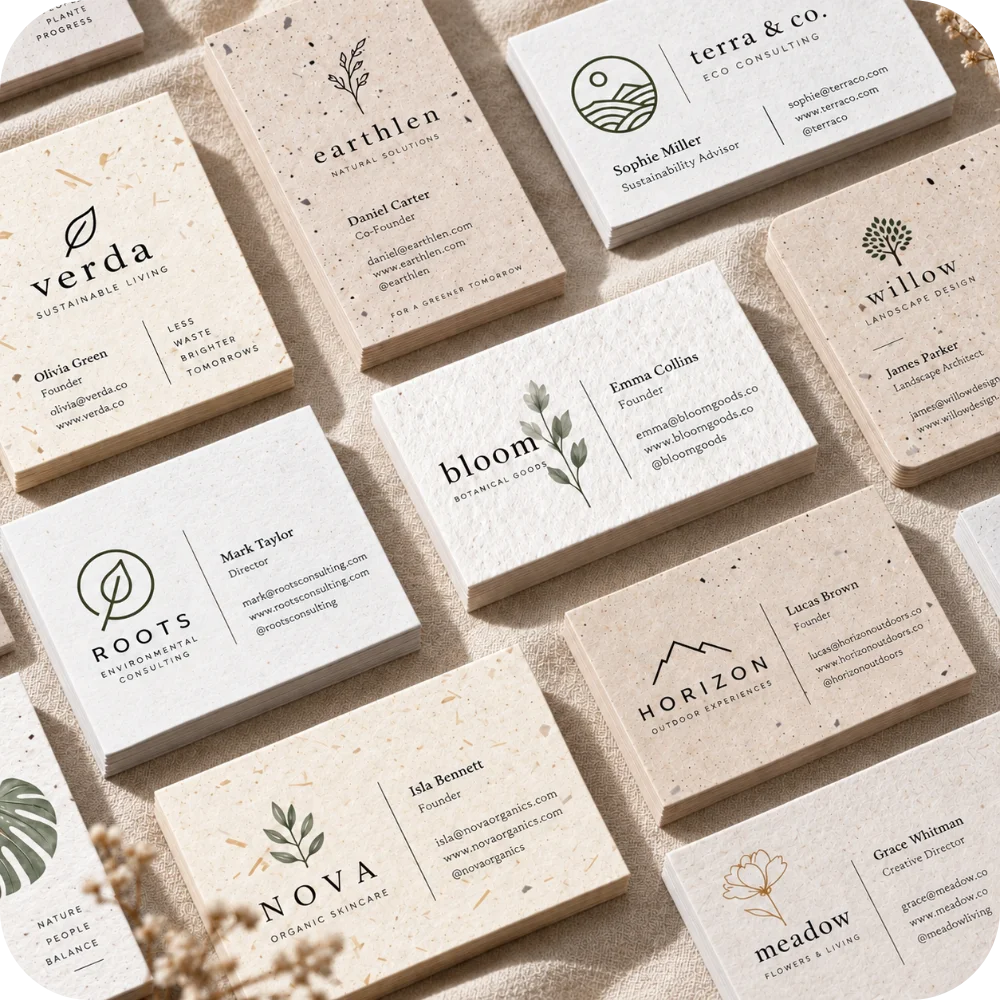
A good business card makes it easy for someone to remember you and take the next step. A plantable business card adds something tactile to that exchange: paper with seeds inside, ready for a second life once the contact details have been saved.
At Myecostudio, you can choose plantable paper or one of four non-seeded eco papers, personalise the design and select the finishing options that suit your brand. This guide explains how to make those choices without losing sight of the most useful part of a business card: a clear introduction.
What is a plantable business card?
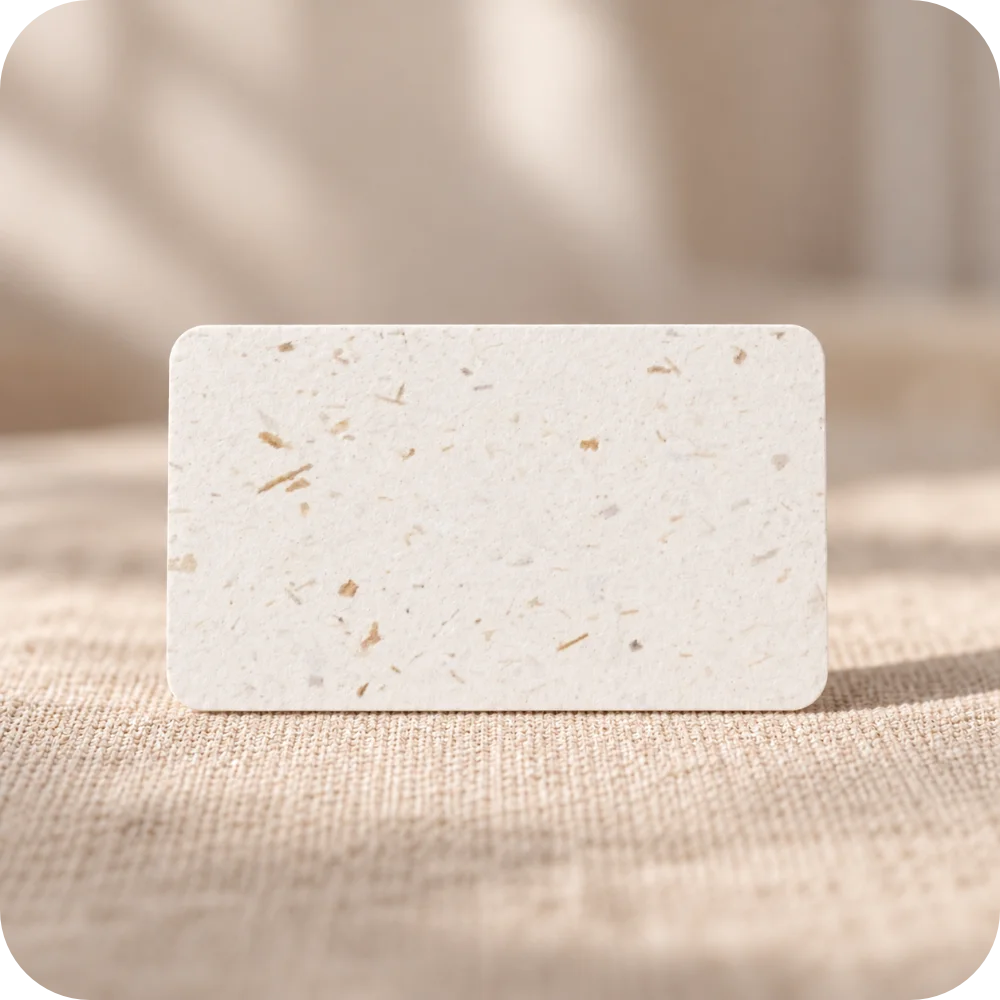
It is a business card printed on seed paper. Seeds sit within the paper fibres, so the recipient can soak and plant the card when they no longer need to keep it. Our seed paper is handmade from recovered paper, and its visible fibres and seeds give each piece a naturally varied surface.
The growing step is an invitation rather than an instant result. Check the seed information and instructions for the exact paper option you order; mixes can vary between products. Germination depends on the seeds, care and growing conditions, so avoid promising flowers by a particular date.
Choose plantable paper or a seed-free eco paper
Our business card options include Plantable paper, Eco Corn, Eco Jute, Eco White Cotton and Eco Coffee. Only the first contains seeds. The other four let you explore different paper appearances without adding a planting step.
Choose seed paper if you want the card to open a conversation about growing something. Explore the non-seeded options if you prefer a card that people will keep as a reference. Look at the paper beside your existing packaging and brand colours rather than judging its tone from a screen alone.
What should you put on a business card?
Start with your business name or logo, one short description of what you do and the best way to contact you. Depending on your business, that might mean your name, email address, website or one social profile. Choose the information that makes the next step easiest, rather than trying to fit every channel into a small space.
A maker selling at a market might prioritise a shop address. A designer meeting clients may need a name and email. A studio including cards in parcels might lead with a short thank-you message and a link to the collection. The layout should reflect how the card will reach people.
Try a ten-second handover test
Print a draft at its intended size and hand it to someone who has not seen the design. Give them ten seconds to tell you what you do and how they would contact you. If they have to search, shorten the message or make the main contact easier to find.
Ask them to open the printed web address or scan the QR code and save your details. The destination should match the conversation: a relevant collection for a market customer, or a contact page after a meeting. Keep a readable address as a fallback, and check again on the chosen paper before relying on the code.
Finally, ask what they would do with the card. If it is seed paper, they should know to save the useful information before planting it. If you want the card kept for repeat bookings or reference, a seed-free paper may fit that purpose better.
One side or both sides?
Myecostudio business cards can be printed on one side or both sides. A single-sided layout keeps the message compact and leaves the reverse for a handwritten note. Two-sided printing gives you more room to separate your introduction from contact details or planting instructions.
For seed paper, one useful arrangement is a logo and a short message on the front, with contact details and a concise planting prompt on the reverse. Give the most important text enough space. Small type and a crowded layout are harder to read on a textured surface.
Straight or rounded corners?
The product page offers straight and rounded corners. Straight corners can reinforce a simple, structured layout. Rounded corners give the same design a softer outline. Neither needs a complicated visual concept: start with the style already used in your logo and packaging, then choose the outline that fits it.
If you are planning a specific card size or a special format, confirm it with us before finalising the artwork. Keep text and essential details away from the edges, especially when rounded corners form part of the design.
Can you put a QR code on seed paper?
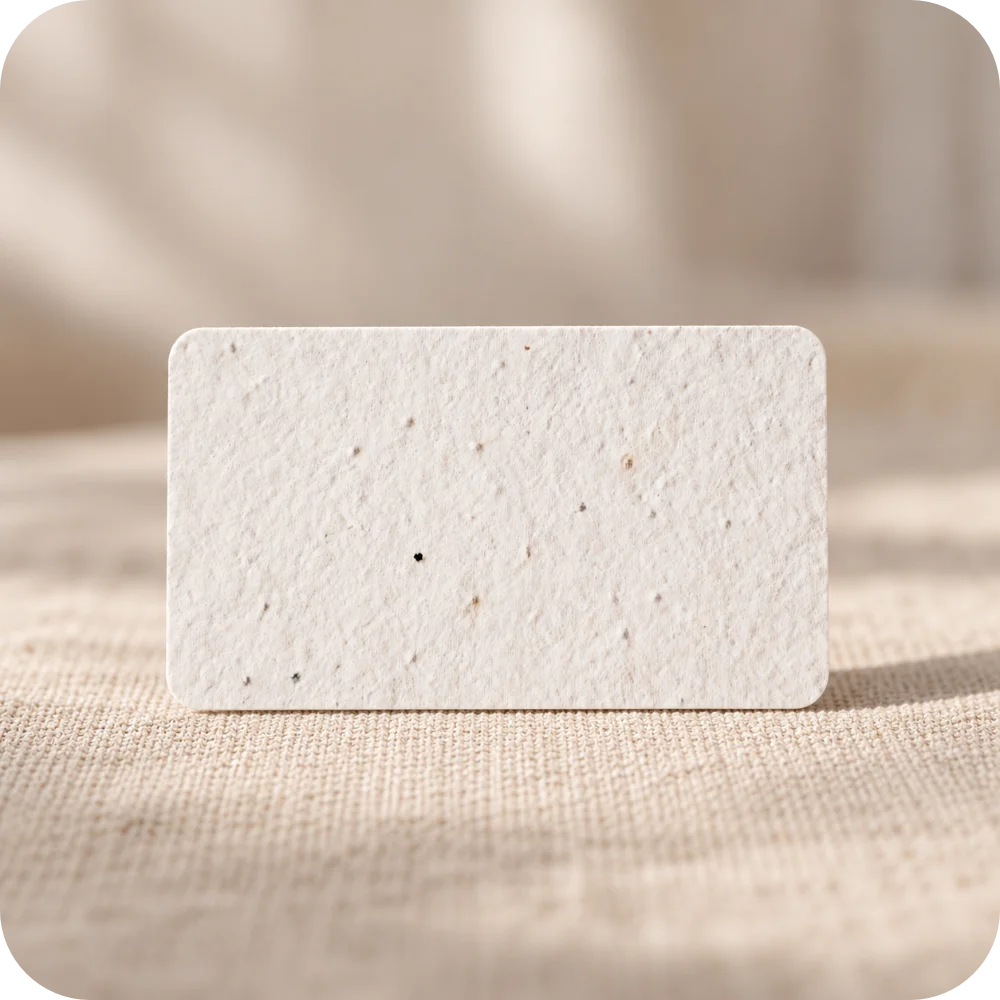
A QR code can help someone save your details before planting the card, but it needs careful checking. Use a simple destination, strong contrast and a clear area around the code. The final printed size and the texture of the selected paper can influence whether phones read it easily.
Test the printed result with more than one phone before relying on the code. Keep a short web address or another contact method in readable text as well. If a code is central to your design, tell us when you send your artwork so we can discuss the layout.
How to order personalised business cards
Choose your paper type, corner style and one-sided or two-sided printing on the product page. You can provide your personalisation in the text box, upload your design or contact us at hello@myecostudio.com. If you already have a template, share it along with the text you want printed.
Before ordering, check names, email addresses, links and any QR code destination. Tell us if your design has very fine details or specific colour requirements. Photos show the character of each paper, while a conversation about your artwork helps establish what will work best for your project.
A useful planting message for your customers
For a seed paper card, a simple message can explain the next step: save our contact details, soak the paper for a few hours, then lay it on damp compost under a thin covering of soil. Keep the compost moist without waterlogging and choose a suitable bright location. Follow any specific instructions supplied with the piece; link to the full Myeco planting guide when space is limited.
Keep cards dry before handing them out or storing them with your packaging. Do not add planting instructions to Eco Corn, Eco Jute, Eco White Cotton or Eco Coffee cards: these are seed-free papers. Clear wording helps people understand exactly what they have received.
A contact card and a Christmas message have different jobs
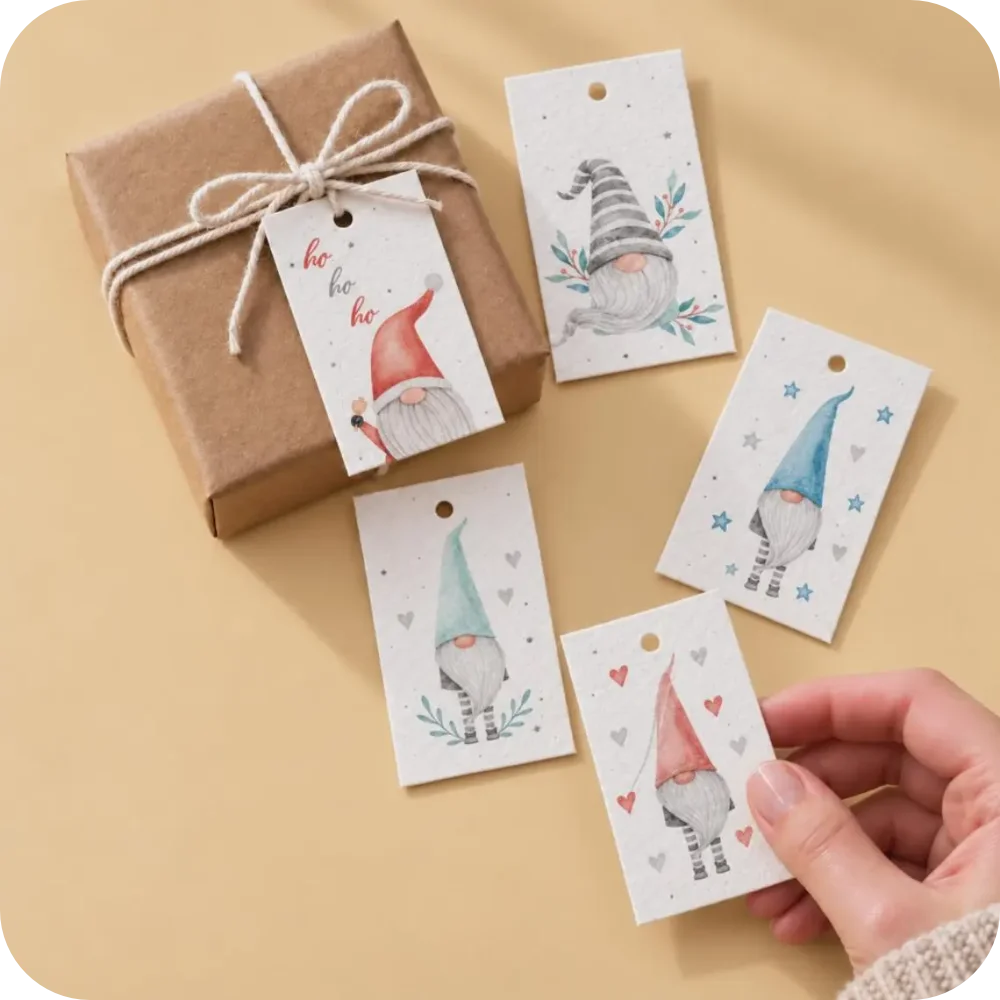
When you send a client or colleague a Christmas parcel, give each piece one job. Put the name on a watercolour gnome gift tag, write the personal thank-you inside a gnome Christmas card, and include a business card only if a contact detail or next step would be useful. You do not need all three in every parcel.
These illustrated card packs have blank interiors for handwritten wishes; choosing a pack does not by itself request custom logo printing. If a printed company message is essential, confirm the relevant product and artwork options first. Both the cards and tags offer a seeded or seed-free paper choice, so keep any planting message with the piece it actually belongs to.
Make your business stationery feel connected
You can carry a consistent visual language across business cards, hang tags and candle dust covers. Check each product’s available papers rather than assuming every item offers the same choice. Let the business card introduce you, the tag identify the product and the dust cover complete its presentation. Shared typography and a clear logo can connect the pieces without repeating every detail.
Explore our personalised business cards and choose the combination that suits your brand. If you need help balancing a design with the paper texture, tell us what you have in mind and we will work through the options with you.
Personalise your business cards → · Planting instructions · Back to the blog