
Myecostudio
Choosing paper is one of the most tactile parts of creating stationery. Before anyone reads a word, they notice its surface, its colour and the way it feels in their hands. For a wedding invitation, a business card or a product tag, that first impression helps set the tone.
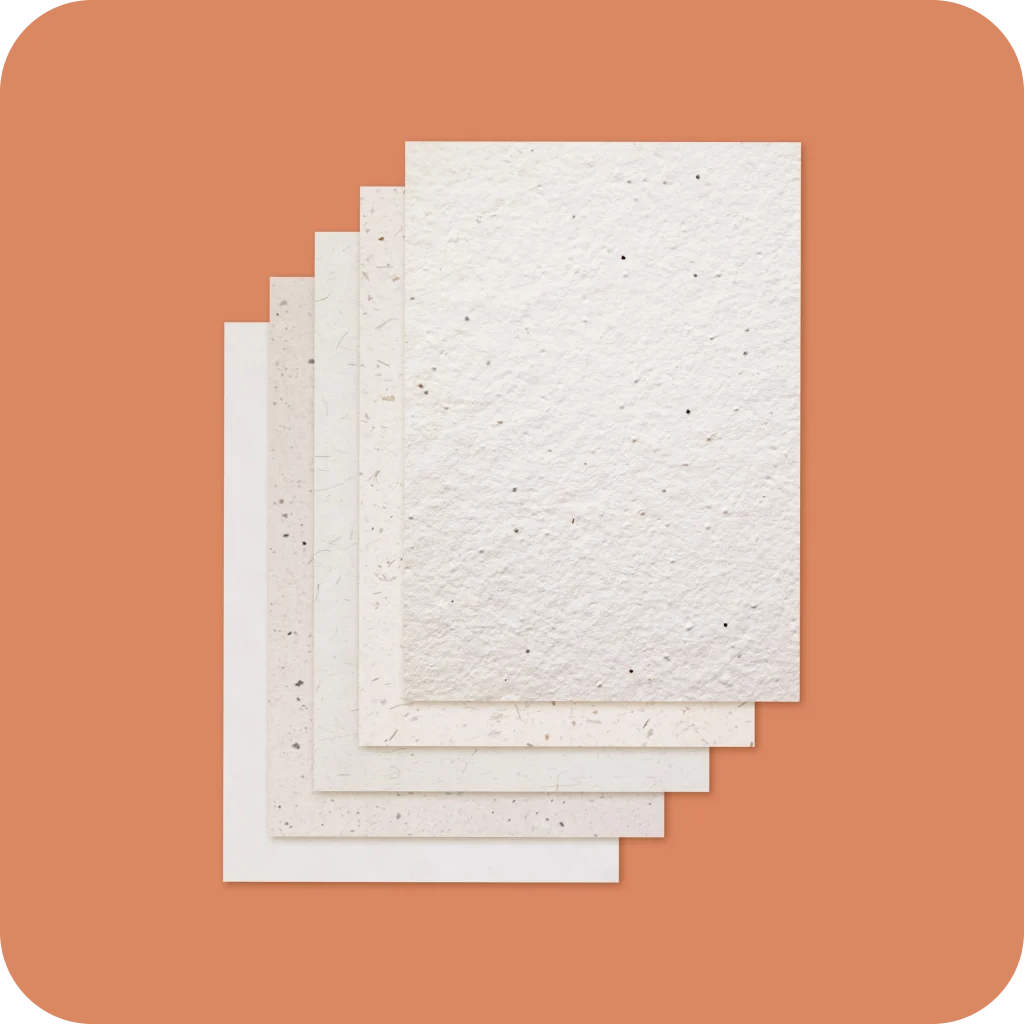
At Myecostudio, our range includes five paper options: plantable seed paper, Eco Corn, Eco Jute, Eco White Cotton and Eco Coffee. They offer different visual starting points for a design, and one important practical difference: only the plantable paper contains seeds. This guide helps you compare the choices, plan your layout and decide which material suits the life you want your stationery to have.
Plantable paper and eco paper: what is the difference?
Plantable paper contains seeds within the paper fibres. Once its first job is finished, it can be soaked and planted to give those seeds a chance to germinate. A card can become a small growing project rather than simply being put away. Our seed paper is handmade using recovered paper donated by local schools and businesses.
Our other four eco paper options do not contain seeds. Corn, jute, white cotton and coffee are the names of the finishes you can select across many products in our shop. Choose them for the paper itself and for how it complements your design. They should not be described or given to customers as plantable.
The distinction matters when writing your message. A planting instruction belongs on seed paper; a simple description of the selected material is more appropriate for a non-seeded card. Avoid treating “eco” as a promise that every paper behaves in the same way or has the same composition.
1. Plantable seed paper: a message with another life
Seeds and visible fibres give our plantable paper its distinctive character. Each piece has the small variations you expect from a handmade material, so your design should work with the surface rather than depend on a perfectly uniform background. A clear logo, generous margins and a short message leave room for the paper to be part of the experience.
This is a lovely option for wedding stationery, thank-you cards, brand introductions and tags that invite someone to take part. The planting step gives you a useful story to tell: keep the contact details, enjoy the message, then plant the paper when it is no longer needed. If a card contains details someone will need later, give them an easy way to save those details first.
Seed information can vary between products. Check the description of the exact item and paper option you choose, rather than assuming that every Myeco card, calendar and blank sheet contains the same mix. Follow the instructions supplied with that piece. Moisture, light, storage and growing conditions affect the result; seeds in the paper do not guarantee flowers or a fixed germination date.

2. Eco Corn paper: a warm starting point
Eco Corn is one of our non-seeded paper options. In our product photographs it offers a warm, natural-looking base that can suit gentle colour palettes and uncluttered branding. It is worth considering when you want the character of the material to support an understated design.
Try it for a business card, a product tag or a candle dust cover with a dark, easy-to-read logo. Rather than choosing a colour match from a screen alone, compare the actual paper with your packaging, ribbon or envelope. Lighting and screen settings can change how a paper colour appears.
3. Eco Jute paper: a textured visual character
Eco Jute is another seed-free choice in the Myecostudio range. Its visual texture can work well with a relaxed, crafted presentation: think a clean wordmark, a short line of text and plenty of breathing room around them. The paper provides interest without needing a busy printed background.
It is a good direction to explore for makers, handmade collections and brands whose packaging already uses natural tones. Test fine lettering and small icons before committing to a full design. Texture can influence how delicate details read, particularly at the size of a tag or business card.
4. Eco White Cotton paper: a lighter canvas
Eco White Cotton is a non-plantable option for projects that call for a lighter paper appearance. It can be a useful starting point for a restrained wedding design, a crisp business identity or a product label that needs a clear hierarchy. A pale base also makes it easier to judge the balance between your typography and the surrounding white space.
The name identifies the paper option in our shop; it is not a claim that every product is made from 100% cotton. If fibre percentages, weight or a particular certification are essential for your project, ask us to confirm the specification of the paper you intend to order.
5. Eco Coffee paper: a deeper natural tone
Eco Coffee offers a different visual direction from the lighter options in the range. Its warmer, deeper appearance can complement simple dark printing and packaging with an earthy palette. It is seed-free, so choose it for its look and feel rather than a planting experience.
Before choosing a design, consider contrast. A delicate pale detail may be less clear against a naturally coloured sheet than a strong dark mark. Compare the paper with your existing packaging and check that your brand name, web address and any essential information remain easy to read.
How to choose the right paper for your project
Start with what the piece needs to do
For a wedding favour or a brand message that invites participation, seed paper adds a meaningful next step. For information someone will keep and refer to, a non-seeded paper can be a straightforward choice. Both can be thoughtfully designed; the best fit depends on how the recipient will use the piece.
Choose the format before refining the design
Blank sheets are available in A4, A5 and A6 formats. A4 gives you space to plan larger work or several smaller pieces, A5 suits a more compact layout, and A6 works well for short messages. Standard A-series dimensions are 210 × 297 mm, 148 × 210 mm and 105 × 148 mm respectively. Check the actual product and your intended cutting or folding plan before ordering.
Let readability guide the layout
Use a clear typeface, comfortable spacing and enough contrast between the ink and the paper. Avoid filling every corner. On a small printed piece, your logo and one useful action often do more than a long paragraph. If you want a QR code, leave a clear area around it and test the printed code on the selected paper.
Check your printing method
Do not assume that any printer can handle any handmade sheet. Thickness, texture and seeds can affect feeding and print quality. Check your printer’s specifications, and ask us about the material and your intended method before putting plantable paper through a machine. We can also discuss personalised printing when you would rather order a finished piece.
Check the product first, then choose its paper
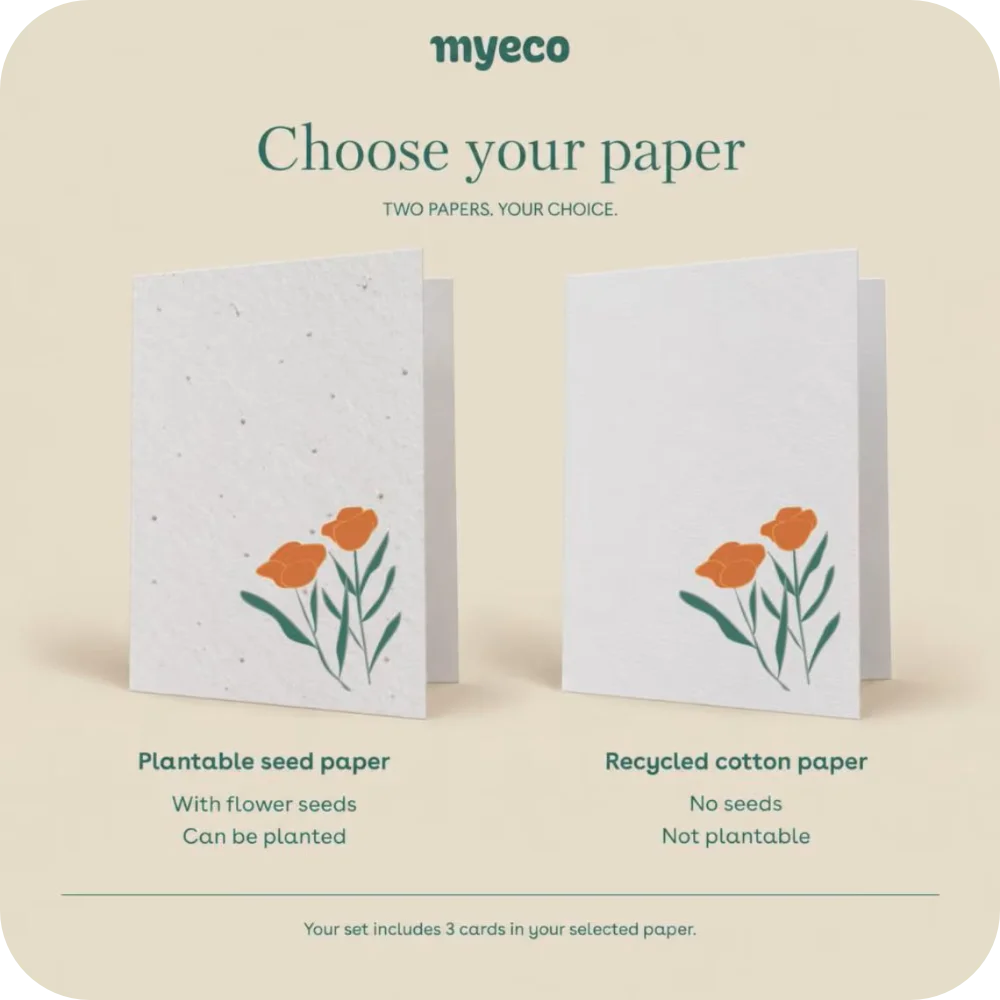
The five papers in this guide describe the wider Myeco range. They are not five options on every product. For example, the watercolour gnome Christmas card packs offer seed paper or white recycled cotton paper without seeds. Choose from the options on that listing instead of carrying a paper choice across from a different product.
Write a short brief before comparing finishes: what is the piece for, should it be plantable, and will the message be printed or handwritten? A card someone wants to keep may suit the seed-free choice; a gift intended as a growing activity needs the seeded option and clear care instructions. That practical decision comes before choosing a photograph or a paper name.
The same papers across your stationery collection
Many Myecostudio business products offer the same five paper choices. That makes it possible to plan a coordinated business card, hang tag and candle dust cover, choosing a shared visual direction without putting identical information on every piece. Confirm the available choices on each product page when placing your order.
A business card introduces you. A tag accompanies the product. A candle dust cover sits with the candle before use. Give each one a clear purpose, and keep the logo, tone of voice and paper selection consistent where that helps your collection feel connected.
How to care for and plant seed paper
Keep unused stationery dry until you are ready to plant it. Our current planting guide recommends soaking the paper for a few hours, then placing it on damp compost under a thin covering. Keep it in a suitable bright location and maintain moisture without waterlogging. If your piece has different seed-specific instructions, follow those.
Only do this with the seeded option. Corn, jute, white cotton and coffee papers do not contain seeds and will not grow flowers. Our step-by-step seed-paper guide explains preparation, storage and what to check if nothing has sprouted yet.
Questions to ask before ordering
Decide which paper you want, which format or product you need, whether printing is required and how the finished piece will be used. If exact colour, thickness, fibre composition or print compatibility matters, ask us before placing the order. A material name and a photograph are a starting point; the right specification depends on the project.
Explore the blank papers and personalised stationery in our shop, or tell us about your idea. We can help you choose a paper that feels right in the hand and makes sense for the message you want to share.
Explore our paper options → · Planting instructions · Back to the blog