
Myecostudio
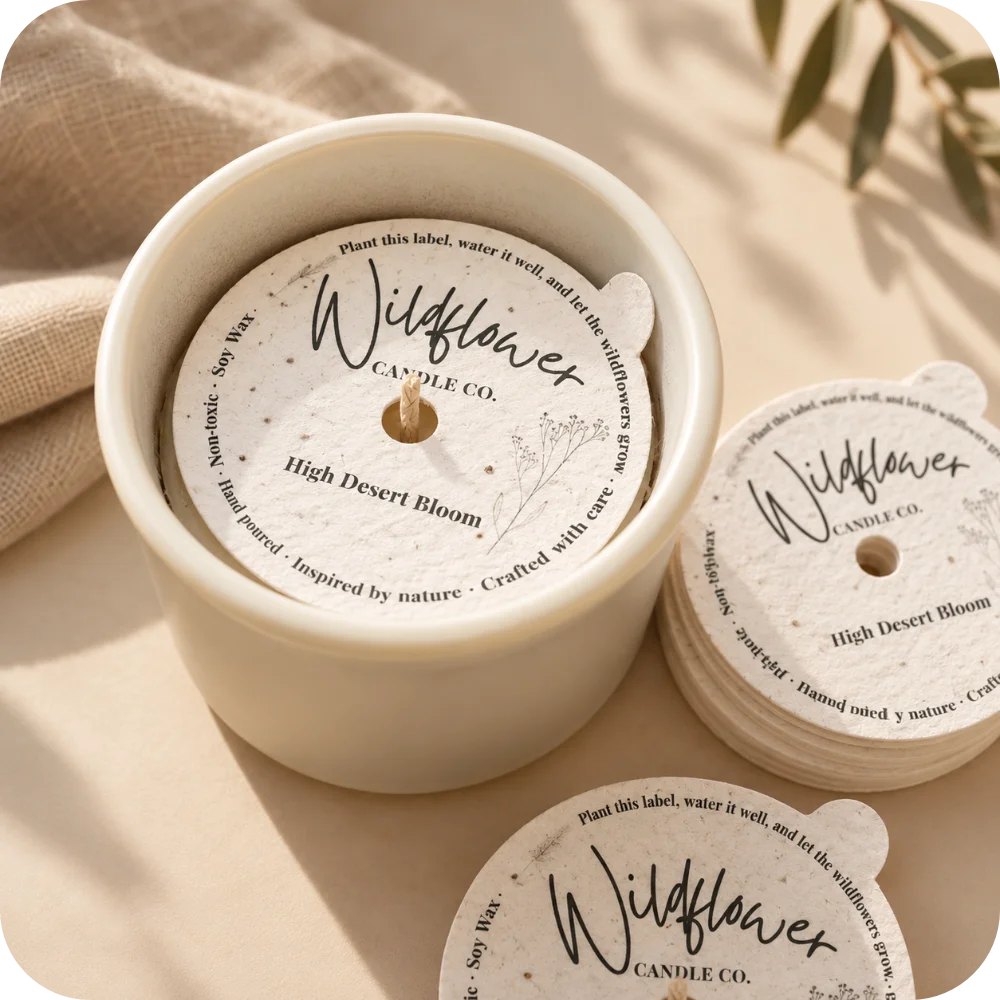
The presentation of a candle begins before it is lit. A paper dust cover sits over the wax surface while the candle is not in use, helping keep dust away and giving the maker a considered space for a logo or short message. It is a small packaging detail with a very practical role.
At Myecostudio, candle dust covers are available in plantable seed paper and four seed-free eco papers. You can choose a diameter from 4 to 12 cm and an opening suited to a cotton or wooden wick. This guide explains how to plan the fit, the paper and the design.
What is a candle dust cover?
A candle dust cover is a removable paper piece designed to rest above the wax around the wick. It helps protect the surface from dust between making, displaying and giving the candle to its customer. It can also carry the candle name, your brand or a short thank-you.
It is not a heat-resistant lid and must be removed completely before lighting the candle. Keep that instruction clear. The paper cover can complement the rest of your packaging, but it should never be treated as something to leave near a burning wick.
Plantable paper or a seed-free eco paper?
Our available choices are Plantable paper, Eco Corn, Eco Jute, Eco White Cotton and Eco Coffee. Only plantable paper contains seeds. Choose the seeded option if you want to invite the customer to grow flowers after removing the cover; choose another paper for its visual character without adding a planting step.
Our handmade seed paper contains visible fibres and seeds, with natural variations from piece to piece. Check the seed information for the exact paper option you order, as mixes can vary between products. A simple printed design lets the material remain part of the presentation while keeping your brand recognisable.

How to choose the right diameter
The product page offers diameters of 4, 5, 6, 7, 8, 9, 10, 11 and 12 cm. Measure the inside of the vessel at the point where the cover will sit. The outside diameter of the jar is not the same as the available space above the wax, especially with thick glass or a tapered vessel.
Allow the cover to be placed and removed without forcing it. Check the actual candle you will sell, including its fill level and the space around the wick. If your measurement falls between sizes or your jar changes width, contact us before ordering so we can discuss the fit.
For a new vessel or a new design, confirm the physical fit before committing to a large run. A cover that is too large can bend or catch on the sides, while a very small one may leave more of the wax exposed than you intended.
Cotton wick or wooden wick?
Myecostudio offers a Cotton Wick option and a Wooden Wick option. These choices refer to the opening in the cover, so select the one that matches the candle you are making. The paper type and the wick opening are separate decisions.
If your candle uses multiple wicks, a broad wooden wick or an unusual layout, share the measurements and arrangement with us before ordering. A product option name cannot confirm every possible wick configuration. The opening needs to leave the cover easy to remove from the finished candle.

What should you print on a candle dust cover?
Start with your logo or brand name, then decide whether the candle name or scent needs to appear. A brief thank-you or planting prompt can add a personal touch, but the available space gets smaller as the diameter decreases. Keep the most useful message at the centre of the design process.
Leave room around the wick opening and the outside edge. Clear text and good contrast matter more than filling the whole circle. On textured paper, delicate lines and very small lettering deserve particular attention. If you want a QR code, discuss the size and test the finished print before relying on it.
Keep the use instructions clear
“Remove before lighting” is an essential instruction for the cover itself. Make it easy for the customer to see, whether on the printed piece or as part of a clear unpacking message. Follow the safety and care information appropriate to your candle, and plan where that information remains after the removable cover has been taken away.
A seed paper cover can also explain its second life, but keep the two steps separate: remove the cover before lighting the candle, then store the paper safely until it is time to plant it. Do not encourage customers to place paper near a flame or a hot vessel.
Check the finished presentation with an unlit candle
Use the actual vessel and finished fill level, with the candle unlit. Place the cover in position, check that the text is readable around the wick opening, and lift it out again. A paper template can help you plan a layout, but it does not confirm how the chosen paper will fit the finished candle.
Then ask someone who has not seen your design to unpack it. Can they identify the candle, find “Remove before lighting” and remove the cover completely without pulling at the wick? This is a presentation and removal check, not a burn test. Keep the candle’s own use and care information with the product after the paper cover has been removed.
How to order personalised candle dust covers
Select the paper, diameter, wick style and quantity on the product page. Current quantity options are 50, 100, 200, 500 and 1,000 pieces. Check the product page for the current price of your chosen combination rather than planning around a single starting price.
Add your personalisation in the text box, upload your artwork or contact us at hello@myecostudio.com. Include the diameter you need, the wick arrangement and any details about the vessel that could affect the fit. If you already have a template, share it before finalising the print layout.
How to plant a seed paper dust cover
Keep unused covers dry and away from wax spills, fragrance oils and moisture. For the seeded option, our current planting guide recommends soaking the paper for a few hours, laying it on damp compost and covering it thinly. Keep it in a suitable bright place and maintain moisture without waterlogging. Follow any specific instructions supplied with the piece; germination depends on the seeds, care and growing conditions.
Eco Corn, Eco Jute, Eco White Cotton and Eco Coffee covers do not contain seeds. Do not add planting claims to those options. If you want a consistent collection, you can use the same paper choice across your candle dust covers, hang tags and business cards while giving each piece its own useful message.
Keep a Christmas greeting separate from the cover
For a candle given to a client or friend, leave the cover to identify the candle and make removal clear. A watercolour gnome gift tag on the outer packaging can carry the recipient’s name. If you want a longer thank-you, the blank interior of a gnome Christmas card gives a handwritten message its own space.
You do not need to repeat the same greeting on every piece. Keep all paper packaging and tags away from the candle before lighting it. Check the paper option for each product separately, and keep planting instructions only with the seeded piece. Illustrated packs do not by themselves request custom logo printing.
Finish your candle collection thoughtfully
A well-chosen cover brings the jar, wax surface and branding together before the first use. Start with the fit, make the removal instruction clear, then choose a paper and design that feel connected to the candle itself. Explore our personalised candle dust covers or tell us about the vessel and artwork you are working with.
Choose your candle dust covers → · Planting instructions · Back to the blog