
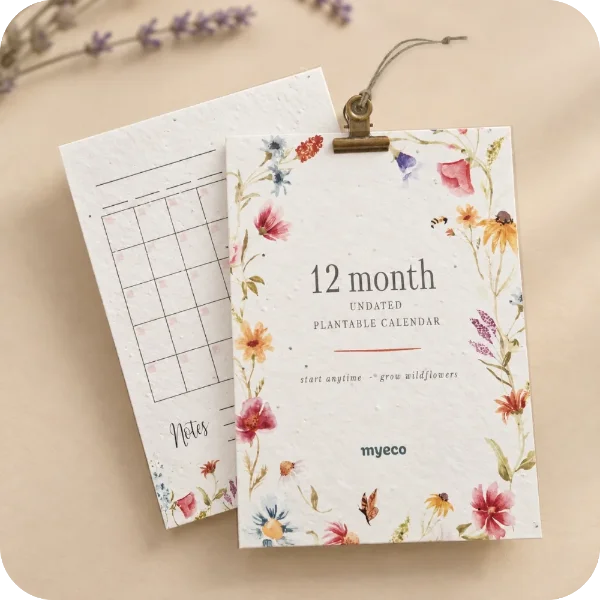
A new calendar usually arrives with January. Real life rarely does. A new job might begin in April, a course in September, a house move in November, or a project on an ordinary Tuesday. An undated calendar lets you begin when you are ready, without wasting pages or waiting for the “right” moment.
That simple freedom is what makes an undated calendar so useful. It gives you the structure of a monthly planner while leaving the starting point in your hands.
What is an undated calendar?
An undated calendar has the familiar layout of a monthly calendar, but the month and dates are left open for you to complete. You choose the first month, write in the dates and continue for twelve months from that point.
It works just like a dated calendar once you have filled it in. The difference is that no page expires before you use it.
Six reasons to choose an undated calendar
1. You can start in any month
There is no need to wait until January. You can start when a new routine, season or idea begins. That makes it especially helpful for academic years, new homes, freelance projects and families whose busiest months do not follow the calendar year.
2. No page needs to go to waste
If you skip a month, you can leave that sheet untouched and return to it later. An undated format is forgiving: it adapts to quieter periods instead of turning them into empty pages.
3. It makes a thoughtful gift throughout the year
A dated calendar has a short gifting season. An undated one can be given for a birthday, a new job, a house move, the start of a course or simply as a small invitation to slow down and organise the months ahead.
4. It suits different ways of planning
Use it for appointments, family plans, content schedules, meal planning, gardening tasks or one meaningful focus each month. The layout provides a framework without deciding what matters to you.
5. Starting it becomes a small ritual
Writing the month and dates by hand creates a quiet moment to look ahead. It is a simple way to turn planning into something more intentional and less automatic.
6. A plantable version keeps changing after the month ends
With seed paper, the page does not have to become waste. When you finish using it, you can plant it and give the fibres and seeds a new purpose.
How our plantable undated wall calendar works
Our Plantable Undated Wall Calendar contains 13 A5 sheets: one cover and twelve undated monthly pages. Every sheet is seed paper, handmade in our studio from recovered paper fibres and a seasonal mix of flower seeds.
The calendar comes with a brass clip and jute twine, ready to hang on the wall. Planting instructions are printed on the back, so they remain close at hand when a month is complete.
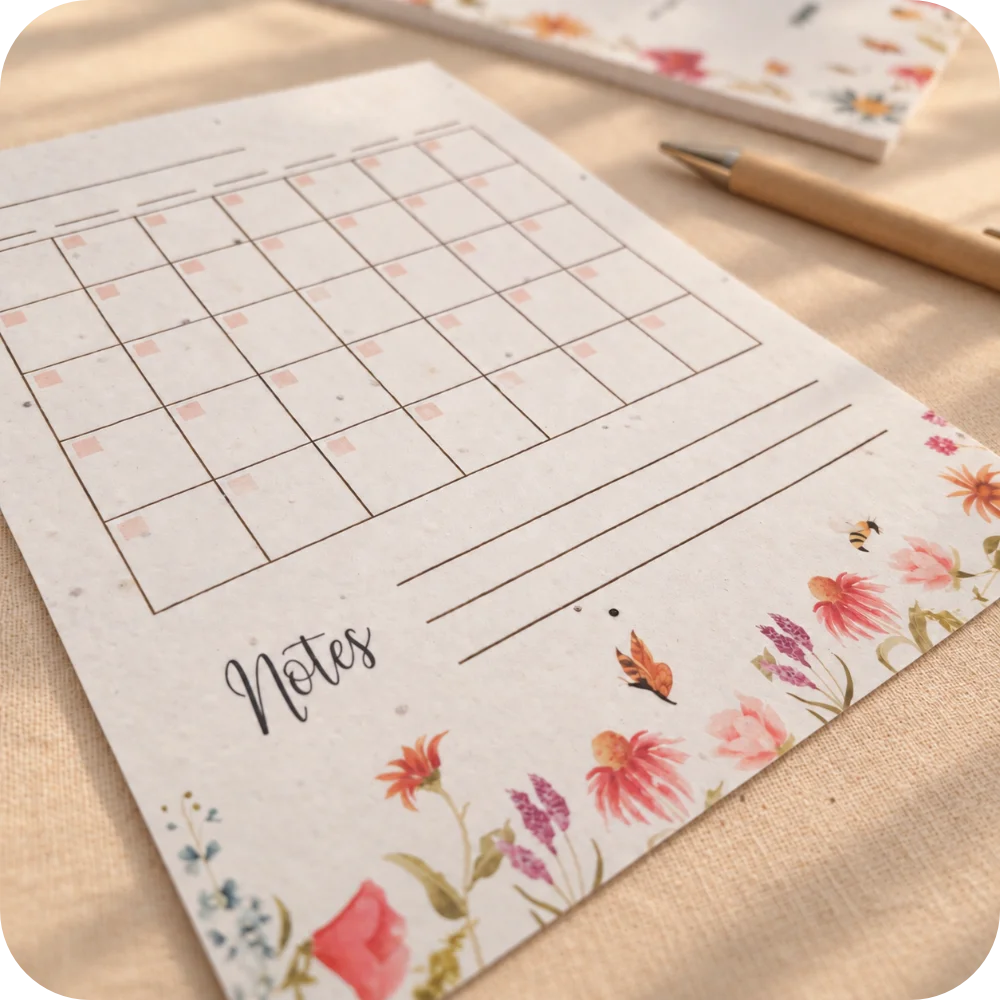
You can choose English, German, French, Spanish or Italian on the product page. The monthly grid and weekday row are blank: you write in the month, dates and weekday names yourself. Choose the product language separately rather than expecting ready-printed dates or weekdays.
How to begin an undated calendar
- Choose your starting month. Begin with the month you are in or the first full month of a new project.
- Label the weekdays before adding dates. Choose your column order, then use a reference calendar to check which weekday the month begins on and how many days it has.
- Mark fixed dates first. Birthdays, appointments, holidays and deadlines create the basic shape of the month.
- Leave breathing room. A calendar is easier to use when every square is not already full.
- Add one intention. A small seasonal goal can make each page feel personal without becoming another long to-do list.
Fill one month carefully before dating the rest
Write the month and year, then label the weekday row in your preferred order. If the month starts on a Wednesday, put 1 under Wednesday and leave the earlier boxes empty. Check the last day against a reference calendar rather than automatically filling every month to 31.
Keep the notes area for details that do not need their own date square: a short shopping reminder or one task to carry into next month, for example. Leave unused sheets blank if you may pause the routine. Undated describes the grid, not a promise that the seeds keep indefinitely; store unused pages dry and follow the care information.
When the month is over, plant the page
Save any notes you still need and remove the brass clip and twine before planting a page. Our current general guide recommends soaking the paper for a few hours, laying it on damp compost and covering it thinly. Keep it in a suitable bright location and maintain moisture without waterlogging. Follow the instructions supplied with the calendar; our full planting guide explains the care.
Seed paper is a natural material, so germination depends on light, temperature, water and care. The process is part of the pleasure: the page that helped you plan one month can become flowers in another.
Dated or undated: which calendar is right for you?
Choose an undated calendar if flexibility matters most, you want to start outside January, or you are buying a gift at any time of year.
Choose a dated calendar if you prefer everything ready to use and enjoy following the year from January to December. Our 2027 desk calendars are available with watercolour fruit illustrations or wildflower illustrations. Both include 13 plantable sheets, a wooden easel and a recycled kraft gift box.
Choosing a calendar for clients or colleagues
Start with how the recipient will use it. An undated wall calendar gives them their own starting month; a dated desk calendar follows a fixed year. Think about where they will keep it and whether filling in the dates will feel useful or simply add another task.
If you want a business gift with your company logo, compare our 2027 plantable calendar with your logo. It is a separate dated desk calendar from the undated A5 wall calendar described here. Check the options on the product you intend to order, rather than assuming the formats or personalisation choices are the same.
A calendar that begins when you do
Planning does not need a perfect date. Sometimes the best time to begin is simply the moment you decide to make space for what comes next.