
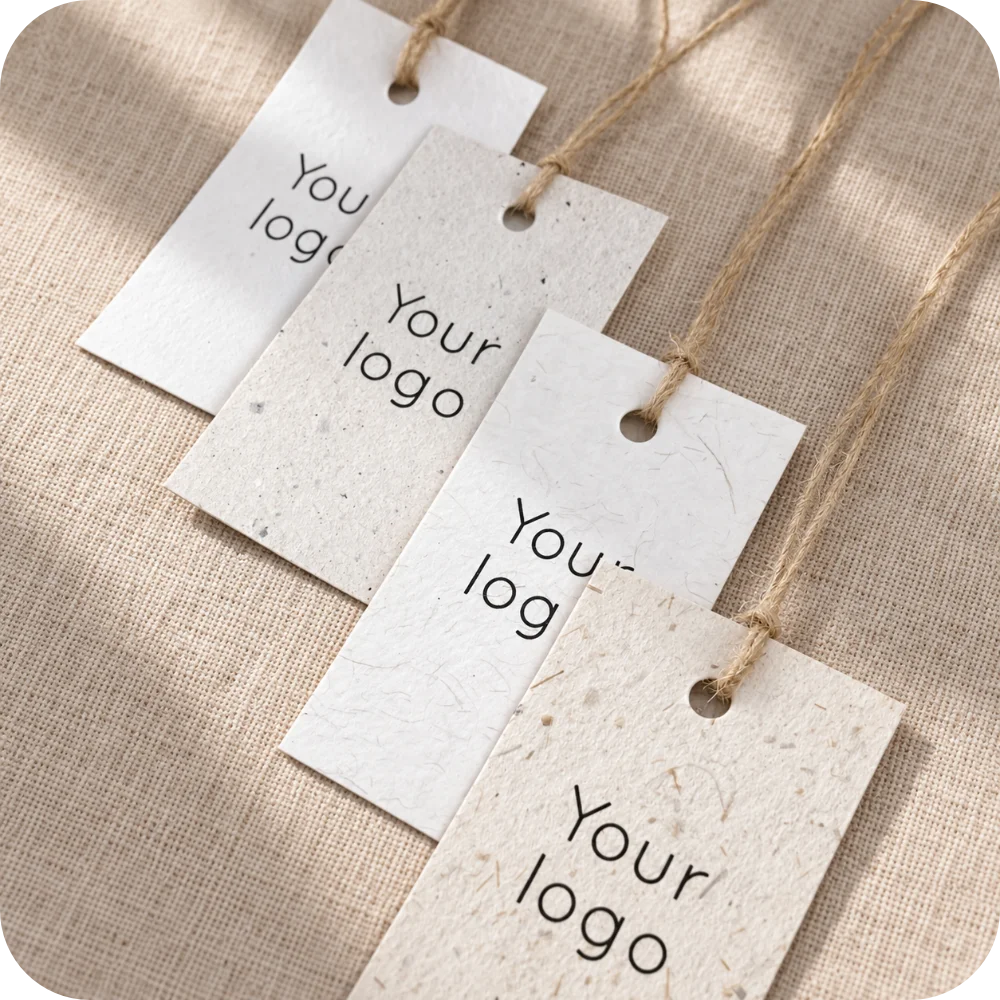
You have a list of clients and colleagues, a date in December and a budget. The difficult part is choosing something that feels considered when it reaches the person receiving it. A useful place to start is a simple question: what will they do with this gift the day after they open it?
A calendar needs somewhere to stand. A card needs a message worth reading. A tag needs a gift to accompany. Thinking about those small, practical details helps you choose with care, rather than ordering the same thing for everyone.
Card, calendar or tag: what job does the gift need to do?
- A card gives the thank-you its own space. Choose it when there is something specific to say: a first project together, a difficult deadline you met as a team or the care someone puts into their work. A few personal lines can be enough; a larger gift does not automatically say more.
- A calendar belongs in a daily routine. It makes sense for someone who likes a visible reference for dates and has a desk, counter or shared workspace. It is less useful for someone who works mainly on the move or already has a calendar they prefer.
- A tag finishes a gift you have already chosen. It can identify the sender or carry a short line on a parcel. It is not a substitute for a longer message: if several people are signing, give them a card instead.
Three situations that lead to different choices
1. A client team you work with every week
Before sending one gift to each contact, find out whether they work together in one place. A shared calendar and a note addressed to the team may suit a small studio; individual desk gifts may be more thoughtful when people work in different locations. Check whether the company accepts gifts, too. If you are unsure, a sincere card avoids putting the recipient in an awkward position.
Make the note about your shared experience: “Thank you for the clear feedback and calm conversations during the launch. We’ve really enjoyed building this with you.” Only use a detail that is true of the relationship.
2. An employee team split between desks and other workplaces
Equal care does not have to mean identical objects. A desk calendar can suit colleagues with a fixed workspace, while a personal card may fit someone who travels between sites. Keep the thought and the level of recognition consistent. Avoid making the gift for one group look like an afterthought, and do not assume that everyone celebrates Christmas in the same way.
3. A parcel that already contains a gift
Lay out the contents before deciding what else to add. A round tag can work when a short message will be visible; a card is better for a longer thank-you. If the parcel already feels complete, you may not need another object. Check that the message will be found when the parcel is opened, rather than buried beneath packaging.
When a card pack is enough, and when a tag helps
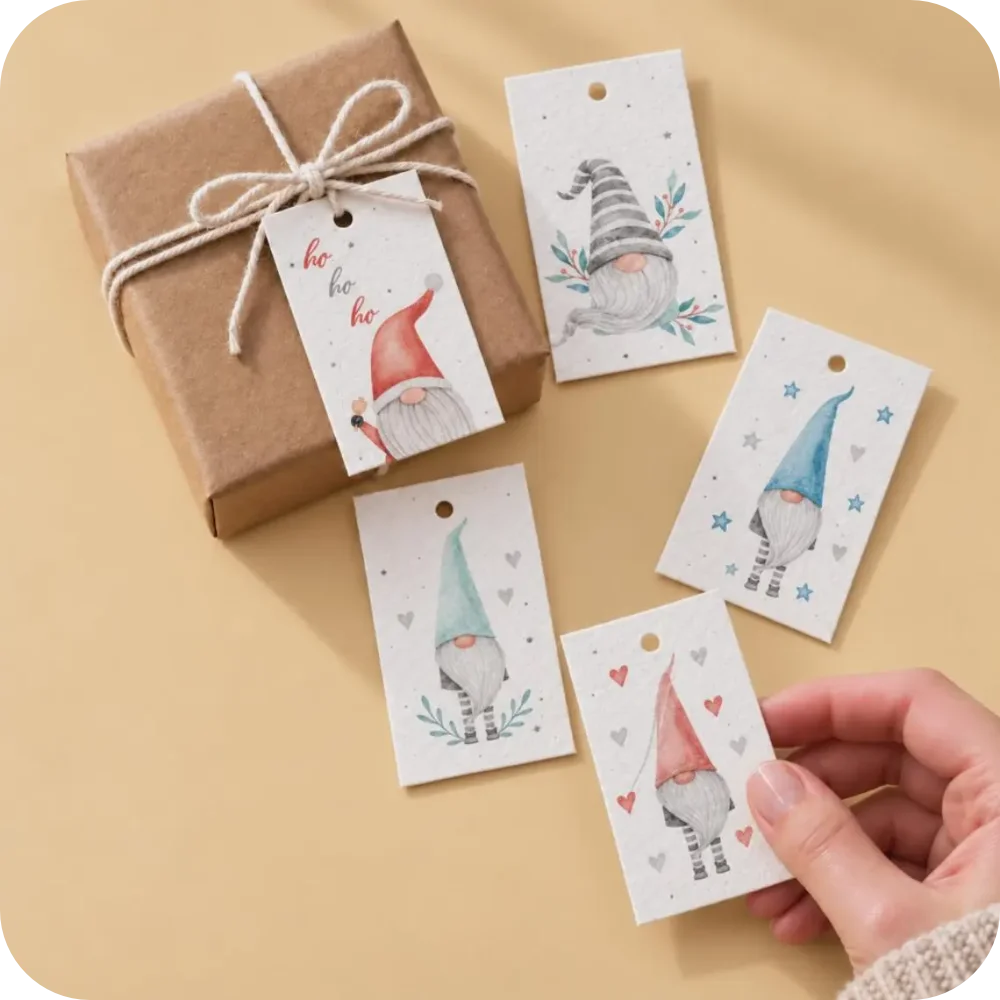
A thoughtful thank-you does not need a box of extra objects. If the words are the main gift, the watercolour gnome card packs leave the inside blank for your own message. They offer 3, 6, 12 or 24 cards. Choose plantable seed paper for a recipient who would enjoy trying a growing project, or recycled cotton paper without seeds for someone who prefers to keep the card. The same paper choice applies across each pack.
If you already have a present, the Christmas gnome gift tags come in sets of 10 with natural twine and To / From lines on the reverse. Use the tag for a short greeting; add a card only when you need more room for the thank-you. These illustrated packs and tags are not, by themselves, an order for a printed company logo. Confirm any custom-print request for the chosen design.
Try the choice with one real parcel before deciding for the whole team. Tie on the tag, read the name at normal viewing distance and check that the greeting is visible when the present is opened. If a name gets lost among the illustration and ribbon, simplify the wording or move the tag rather than making the message longer.
When a personalised plantable calendar makes sense
Myeco’s 2027 plantable calendar with your logo is a small desk calendar with a wooden easel. The set includes a plantable cover, twelve monthly pages, a planting-instructions card and a kraft gift box. Your logo appears on the cover, each monthly page and the box’s paper belly band.
That gives you three useful things to think about before choosing it:
- Will it have a place? Picture the desk or counter where it will stand. Ask whether the recipient uses a paper date reference; do not assume that working in an office means they want another desk object.
- Will the calendar feel familiar? The product offers English, German, French, Spanish and Italian, plus a Monday-start EU version or a Sunday-start US version. Choose for the person using it. Their delivery country alone may not tell you their preferred language or week layout.
- Will the logo be comfortable to live with? It appears throughout the set, so review how it sits alongside the dates. A mark that looks clear on a screen may feel too prominent at the actual printed size. Keep the calendar easy to read.
The cover and monthly sheets are seed paper. Once a month is over, the recipient can follow the planting guide if they would like to plant the sheet. Treat that as an invitation, with clear care instructions, rather than a promise of flowers: growing conditions and care matter. The calendar should still be a thoughtful choice for someone who simply enjoys using it on their desk.
A practical example: turn a list of 75 people into an order brief
Imagine you want to thank 40 colleagues and 35 client contacts. That does not necessarily mean ordering 75 calendars. If 20 of those clients share five offices, you might choose five shared gifts for that group and individual gifts for the other 15 contacts. You would then have 60 gifts to plan: 40 for colleagues and 20 for clients. This is an example of counting, not an order recommendation or a Myeco quantity offer.
Make a simple working list with one row per gift. Record the recipient or team, the item, message language, calendar language and week layout if relevant, handover method and who will approve it. Keep delivery addresses in your usual secure order process. Separate the date you want to hand over the gift from the date you need to receive it.
If you need more than one calendar language or week layout, confirm how the quantities and artwork should be grouped before ordering. Do not assume that a single selection in the product form covers a mixed batch.
Compare the whole task, not just the gift price
Two gifts with similar prices can need very different amounts of work. Count the time for checking names, approving the artwork, signing notes, packing and sending to separate locations. Think about who will do each job. A personal line for 15 clients is a different task from handwriting 300 cards.
For timing, use the current delivery estimate for the destination and read how preparation is calculated. Where a personalised item needs a proof, the dates run from approval. Leave time in your own plan for reviewing the proof; do not treat the day you upload a file as the start of dispatch.
Five checks before you approve the final version
- Read it at the intended size. Check dates, small lettering and logo legibility, not just how the design looks enlarged on a screen.
- Check the details separately. Names, year, accents, language and the start of the week deserve a dedicated pass. For a German recipient, decide whether the note uses Sie or du and keep it consistent.
- Remove the sales pitch. A thank-you loses warmth if it ends with an offer or a request to buy again. Let the message stand on its own.
- Give one person final approval. Collect comments in one place and make sure everyone is looking at the same version. Confirm what is included and what still needs an answer.
- Picture the opening. Will the recipient know who it is from? Will they find the note and planting instructions? Is the delivery or handover plan realistic?
If you choose company Christmas cards, use our checklist for your logo, message and final review before preparing the order. It helps you check the names, logo legibility and approved version without mixing those details into your gift list.
For the wording, our company Christmas card messages for clients and employees can help you find a starting point. You can also compare Myeco’s stationery for businesses. Choose the gesture that fits the relationship, then give the small details the time they deserve.
Once the gifts and messages are chosen, our guide to packing company Christmas gifts shows how to keep each recipient’s card and tag together, with a three-gift example and a clear stopping point if you need to pause.