

Start with one thing you can thank the reader for. It might be the time they spent explaining what they needed, the care they took with a last-minute change or simply the chance to work together. Put that detail in a sentence, add a wish for the holidays and sign the card with a name they recognise.
Christmas messages for clients
For a new client: “Thank you for trusting us with your first project this year. We loved seeing your ideas come together. Wishing you a lovely Christmas, from all of us at [company].” Name the project if you know it will be familiar to the reader.
For someone you work with regularly: “Thank you for another year of good conversations and shared work. We hope you get some time to slow down over Christmas.” Add one small memory if you’re writing the cards individually.
For a shared mailing list: “Thank you for being part of our year. We wish you a peaceful Christmas and a good start to the new year.” This works when recipients have different histories with your business.
Christmas messages for employees
For the whole team: “Thank you for the care you’ve put into your work and the ways you’ve helped each other this year. We hope the holidays bring you time for the things you enjoy.”
For a colleague you know well: “Thank you for making the new starters feel welcome this autumn. You made their first few weeks much easier. Wishing you a lovely break.” Swap in something you saw them do.
For a team working through the holidays: “Thank you for the work you’re doing over the holidays and throughout the year. We hope you find time to celebrate and rest when your schedule allows.” Check whether the wish fits the people receiving it.
A note for suppliers and collaborators
Think about what they made possible. A note to a supplier might say, “Thank you for taking the time to talk us through the options on our spring project. It made the decision much easier. Warm wishes for the holidays.” For a creative partner, try, “It was a pleasure shaping [project] together this year. Thank you for sharing your ideas so generously. Wishing you a happy new year.”
A year-end greeting for a mixed audience
“Thank you for working with us this year. Wishing you a peaceful end to the year and a happy start to the next” works as a greeting for readers who celebrate different occasions. If you’re sending cards in several languages, let someone fluent in each language read the message aloud. Check that the tone feels as warm in translation, and that names and accents are correct.
Turn a polite greeting into a message that sounds like you
Before choosing an example, jot down three things: who you are thanking, what they did and why it mattered. Turn those notes into one sentence, then add a wish that fits the person. This keeps the card personal without making it long.
For a client, “Thank you for your continued support” could become: “Thank you for trusting us with the shop opening in May. Seeing your ideas take shape was a lovely part of our year.” The second version gives the reader something they can recognise. If you did not work on a shop opening, replace the detail; do not borrow a memory simply because it sounds good.
For a colleague, “Thank you for your hard work and dedication” could become: “Thank you for taking the time to show our new colleagues how everything works. You helped them feel at home.” Notice what changes: the message names a contribution and its effect, rather than praising the person with a phrase that could fit anyone.
Still deciding whether the greeting should come from the company, your team or a named person? Our guide to choosing who signs a company Christmas card helps you match the sender to the relationship.
Make the printed message work with a handwritten line
If one design is going to many people, keep the printed message true for everyone. A shared line such as “Thank you for being part of our year” can leave room for a personal sentence beside the signature. Put project names and individual memories in that handwritten space instead of forcing them into the version sent to the whole list.
Try a simple structure: one shared thank-you, one personal detail and one recognisable signature. For example: “Thank you for being part of our year. Marta, your help with the autumn delivery made a real difference. Warm wishes, Ana and the Myeco team.” Treat the names and situation as an illustration, then write your own.
Read the card as the recipient would. Avoid “another wonderful year together” for a new client, wishes for a holiday break for someone who will be working, or a thank-you that makes a difficult year sound effortless. A small, accurate sentence usually feels warmer than a grand claim.
If you are deciding whether the message should accompany a card, calendar or parcel, our guide to Christmas gifts for clients and employees compares those situations with a practical example for organising the list.
Choose a card with room for your message
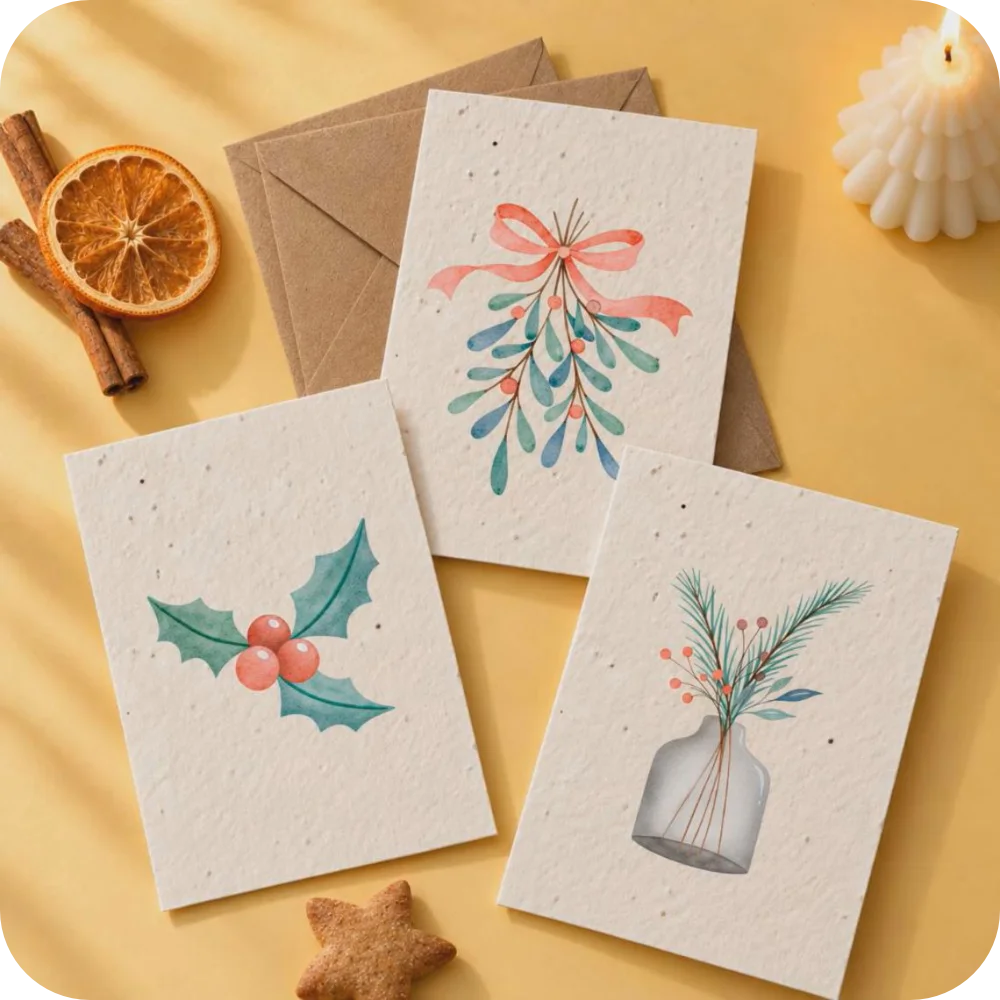
For a handwritten thank-you, the Holly & Mistletoe Christmas card pack has blank interiors. Write out one complete card before starting the batch: the greeting, your personal line and every signature. If several colleagues will sign it, ask them to try that first card together so the last name has as much space as the first.
Choose the paper as well as the illustration: this pack offers flower seed paper or white recycled cotton paper without seeds. Only the seed paper option is plantable. If you want a printed company message or logo, check the specific personalised product before ordering; a ready-illustrated pack and custom printing are different choices.
Read it once before it goes to print
- Check that the thank-you is true for everyone on the list.
- Read the message at the size it will appear on the card.
- Check the recipient’s name, the company name and the signature.
- Leave room for a handwritten line if someone will add one.
Once your message feels right, use our company Christmas card checklist for your logo and message to review names, logo legibility and the final version before placing an order.
If you’re still choosing the card, our guide to plantable Christmas cards covers design and personal messages. You can also explore Myeco’s stationery for businesses.